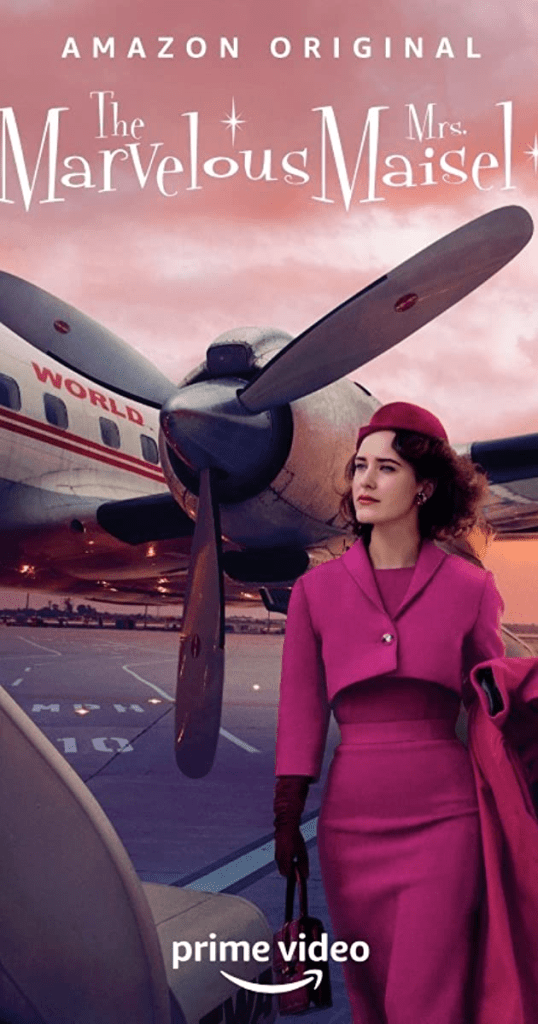
Amazon Prime’s The Marvelous Mrs. Maisel shows the world modern feminism through a comedic lens.
Comedy is fueled by oppression, by the lack of power, by sadness and disappointment, by abandonment and humiliation … Judging by those standards, only women should be funny.
– Miriam ‘Midge’ Maisel
Usually, when you think of the late 50s and New York you picture a bunch of white dudes talking about business. Not even any business in particular. You just picture smoking and drinking and a lot of backward comments and then maybe laughing and handshaking and breadwinning.
What you don’t think of is a woman successfully fighting her way into one of the most male-dominated industries of all time: comedy. The Marvelous Mrs. Maisel tells just that story: a complacent upper-class Manhattan housewife is left by her husband and stumbles into comedy.
But what makes this show different from others that show women succeeding in entertainment is that the protagonist, Miriam “Midge” Maisel, isn’t fighting alone. Equally integral to her success is her manager Susie, a streetsmart woman who finds crafty ways to “get her girl to the top”.
The dynamic that Maisel shows us is unique for shows with female protagonists. A lot of shows try to be progressive by simply adding women to the show. But this creates the “sexy lamp” phenomenon. As described by Kelly Sue DeConnick during a 2013 interview with IGN, “ if you can remove a female character from your plot and replace her with a sexy lamp and your story still works, you’re a hack.”
The other classic motif is the leading lady who is constantly influenced by all the male characters. Jocelyn Nichole Murphy of the University of Arkansas describes this issue in the world of cinema, saying that “female characters [ofter are] centered in ‘themes of self-sacrifice, defined…in relationship to children or to men.’” Katniss Everdeen from The Hunger Games series is the perfect example. She is strong in her own right but her character is always constantly linked to male love interests like Peeta and Gale.
Then we have the “independent feminist”: a trope that tries to define their character by making every male character an antagonist the woman has to defeat or overcome. This trope is most “inspiring” and often is the most progressive. Oftentimes the woman is a lone hero who takes revenge on the men who have wronged her, such as in 2017’s Revenge or 2020’s Promising Young Woman.
But the goal of modern feminism, like any equality movement, is to allow women and men to not be in competition. While we may root for the independent feminist trope and enjoy seeing women be able to finally take action against their abusers, that can’t be the only way strong women are depicted in the media. The adversarial relationship often demonstrated in the independent feminist trope still makes an “us vs. them” mentality that isn’t sustainable for long term equality.
Maisel shows us a female protagonist who competes with both men and women. As much as Midge has to prove herself to sexist male club owners, she also competes with fellow female comic Sophie Lennon. At the same time, Midge isn’t ever made to ignore her traditionally female stereotypes. She still loves to shop and wear dresses and continues to cook and take care of her kids. And most importantly, she is still shown to be reliant on others. Midge has to turn to her family for financial support, and she relies on Susie to actually succeed in comedy.
And that’s the secret sauce that makes the show so successful. Midge is a smart and successful character in her own right, but she isn’t depicted as a superwoman who doesn’t need help. And when she does need help, often she turns to other women to help her. And there are many times where she is made to choose between her career and her comfortable life and she chooses her career.
Midge Maisel creates a new kind of female protagonist who works as an equal to men and who is allowed to rely on both men and women to support her. She is the epitome of modern feminism because she isn’t shown to be “different from other girls”. Just as she is succeeding, she inspires one friend to advance herself by becoming financially independent as a typist and inspires her mother to turn down her family’s wealth on feminist principles of inclusion.
As the fight for equal rights quietly continues, it’s important for us to recognize the power of media in shaping the psyche of the masses. The Marvelous Mrs. Maisel found the magical recipe for how to somehow accurately depict feminism in the 1950s while also being a hysterical binge-worthy show. And that, friends, is simply marvelous.

 Midbrow