Categories
Uncategorized

*Chef’s Kiss*

Bon Appetit’s Youtube channel has set the new standard for how media companies need to brand themselves.
Here, try it. I want you to know that I can accept zero criticism right now

– Claire Saffitz

If 10 years ago I asked you to name the first chefs you can think of, you’d probably have a very short list: Martha Stewart, Gordon Ramsay, Bobby Flay, maybe Paula Deen. Your list would be short and unchanging and probably consist of the names you saw on Food Network.

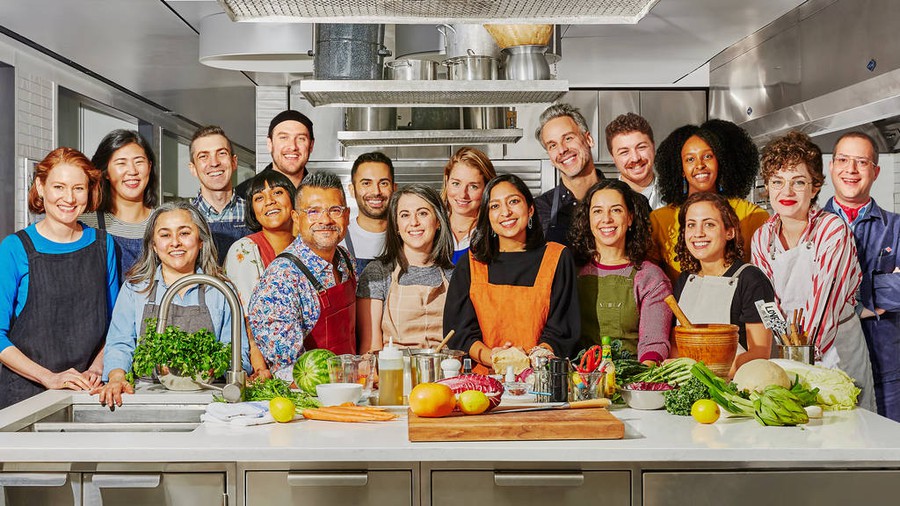
If I asked you or 5.95 million other subscribers that same question today, your answers may sound a little different: Claire Saffitz, Brad Leone, Carla Lalli-Music, or any of the other members of the Bon Appetit test kitchen. 

Strangely enough, BA has become a Youtube phenomenon, blurring the line between magazine and television series with its assorted internet shows and a cast of familiar faces. 

The history of what can best be described as a food/media empire started in 1956 when the magazine was founded. Eventually bought up by Conde Nast (who currently own publications such as Vogue, GQ, and The New Yorker), the magazine has continued to thrive under current Editor Adam Rappaport. Now the magazine has expanded to include the extremely popular Youtube account, various social media channels, and a podcast. They even have a merch store. Essentially it’s doing everything right as a modern media company. 

BA started their Youtube channel almost 8 years ago in 2012 but didn’t see the rapid growth they do today until video editor Matt Hunziker (affectionately referred to as “Hunzie”) changed the channel’s video style with a 9 minute video of Test Kitchen Manager Brad Leone making Kombucha. Branded under the name “It’s Alive with Brad”, the video moved away from the polished look BA was used to and instead was, as Haley Nahman puts it,  “full of spills and swearing and fast cuts with irreverent commentary added via text overlay”. 

The video now has 3.3 million views since being published on October 21, 2016, and it started the new BA as we know it. Since then many of the editors-at-large and various other members of the magazine have started their own web series on the channel. Leone himself has continued “It’s Alive” as a show about fermentation, but series such as Carla Lalli-Music’s “Back to Back” feature celebrity guests trying to keep up with only verbal instructions of a professional chef, and Chris Morocco’s “Reverse Engineering” shows Morocco recreating recipes after only smelling or tasting them. 

The arguably most famous of BA’s shows, though, is Claire Saffitz’s “Gourmet Makes”, where Saffitz is tasked with recreating junk foods from scratch (and hopefully making them more “gourmet” by using better ingredients). 5 episodes from the series alone make up half of the channel’s top ten most popular videos, and Saffitz now has 835 thousand followers on Instagram. 

What makes Saffitz and every other member of the BA test kitchen so entertaining is how human they all seem. The members often interact with each other during episodes, and often they can be seen working in the background of every shot. Unlike most cooking shows that are designed to look effortless, BA’s videos often pull back the curtain on the reality of recipe design and kitchen work. Claire, for example, regularly gets frustrated and fails miserably as she tries to recreate snacks like Pop Rocks, but her perseverance through it all leaves viewers intensely satisfied.

The personality that gets to shine through BA’s videos is definitely the root of the company’s success on Youtube, and will definitely be a model for media companies for years to come. 
Categories
Uncategorized

Netflix And Chill Out

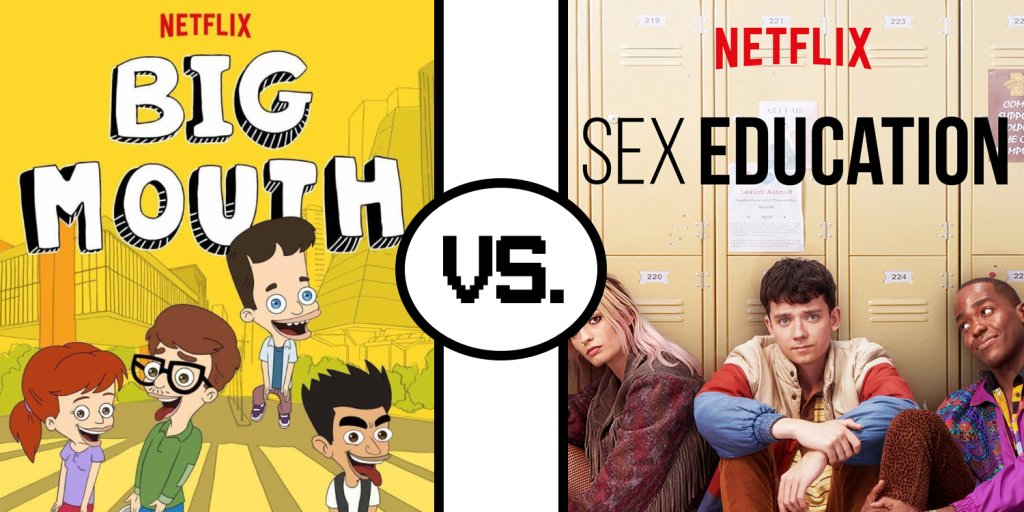
Netflix’s Big Mouth and Sex Education are doing more for students than most schools are, and that’s a problem.

I think I have a problem. My body has complete control over me.

– Otis Milburn

Sex. 

Depending on your upbringing, or just your general life experiences, that word may make you cringe. Or it may intrigue you. Or you’re just reading this as a healthy and well-adjusted adult and so the word doesn’t particularly mean much to you. 

Regardless of which category you fall into, sex is one of those topics that’s very hard to breach for young people. It’s uncomfortable to discuss because it’s “supposed” to be a private and intimate affair. Discussing it is seen as indecent. 

And yet there comes a time in every young person’s life when they must receive the fated “talk”. The topic of sex must in some way be breached so that the child can prepare themselves to enter a world full of many choices, many questions, and many consequences. 

But the quality of these talks varies significantly for many young people. Some don’t have parents who are willing or even able to answer the questions they have. In fact, only Forty-three percent of parents say they feel very comfortable talking with their children about sex and sexual health according to Planned Parenthood. And when it comes to Sex-Ed in schools, the quality can range significantly. Only 29 states and DC require some form of Sex-Ed to be taught in public schools, and of those states, only 22 require that information to be “medically, factually or technically accurate”.

And so the problem arises that we are truly doing disservice our kids by not arming them with the knowledge they need to have healthy sexual lives. However, shows like Netflix’s Big Mouth and Sex Education are providing access to real information about a wide variety of topics relating to sexual health to a whole new audience. 

The shows find ways to do this in a way that doesn’t feel out of place. They embrace the reality of sex and development as something normal to everyone, which somehow makes the shows feel more real. In Season 2 Episode 5 of Big Mouth, “The Planned Parenthood Episode” the show actively discusses Planned Parenthood while discrediting misinformation and providing a witty guide to contraception (in a Bachelorette style skit, nonetheless!). 

In the same vein, Sex Education opens its sophomore season with some very real answers to questions about chlamydia with some very direct explanations from the main character Otis that “you cannot catch chlamydia from the air, you have to have sexual contact with the carrier”. 

Many teens have found a haven in shows like Big Mouth and Sex Education, saying that the advice on screen is usually being discussed by friends, which the Guardian says “opens up the conversation, so advice can be delivered in a frank way rather than seeming clinical and removed”. 

So even if our schools aren’t doing enough to prepare our kids to enter the adult world of sex and relationships, at least streaming services like Netflix are doing something. But it sure would be nice if schools could start taking some responsibility and start giving good Sex-Ed to students. Because if there’s one thing we don’t want, it’s a bunch of teenagers getting sex advice from the internet.

Categories
Uncategorized

Looking For Representation

HBO’s Looking opens a window into the lives of LGBTQ people. But is this just another stereotype?

I asked out my boss while straddling a torpedo.

– Patrick Murray

Finding good gay characters is hard. 

For many people in the LGBTQ community, finding representation in media is next to impossible. Even when we do find a character that’s like us, they’re never the forefront. It’s never their story that gets the focus. 

Like the Bechdel test I discussed in my post about The Marvellous Mrs. Maisel, there’s another test that the Gay & Lesbian Allaince Against Defamation (GLAAD) uses to determine LGBTQ representation in media: the Vito Russo test.

Essentially the same as the Bechdel test, the Vito Russo test looks at LGBTQ characters and says that a film or show passes the test if there is an LGBTQ character who is both essential to the plot and who is not defined by the fact that they are LGBTQ (in other words, they are more than just “the gay character”).

The sad reality is, though, that in 2019 GLAAD found only 18.2% of major films contained characters that identified as LGBTQ (20/110). Of those films, only 13 then passed the Vito Russo test. The results are even slimmer when you start to break down those films into demographics, where still white gay men have a majority of the representation. 

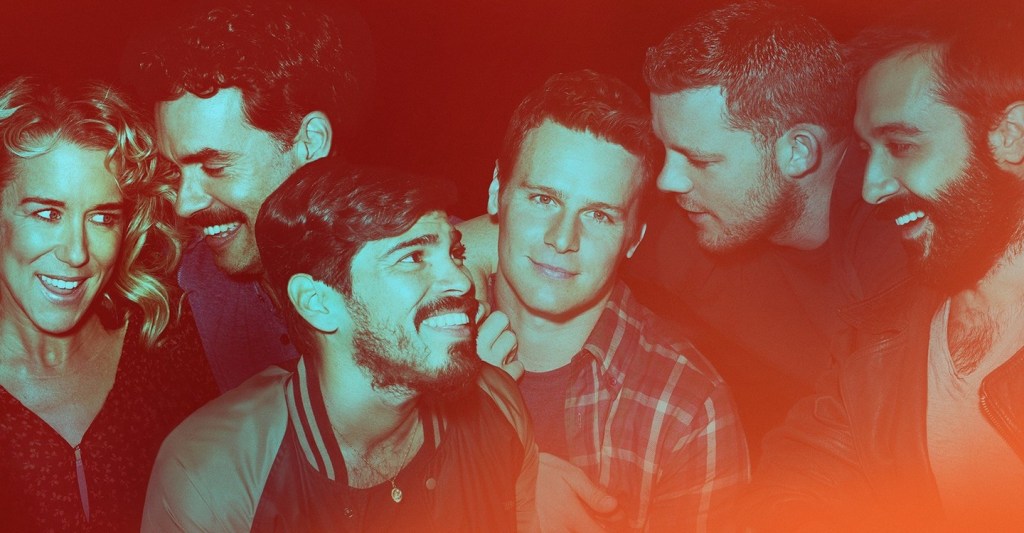
Segueing over to the small screen, HBO’s Looking definitely passes the Vito Russo test. Set in modern-day San Francisco, it focuses on the lives of three gay friends who deal with the assorted social professional and romantic problems that any millennial living in San Fran faces. While of course being gay is a major part of the show, the characters all have fully fleshed out lives beyond just being gay, and all of them are essential to the plot. 

And yet for all the good Looking did by providing a platform to tell the story of gay people, it didn’t exactly paint the LGBTQ community in the best light. The main character Patrick has a long time affair with his boss which results in his boss breaking up with a long time boyfriend. Another main character, Augustín, breaks up with his boyfriend after it’s revealed that he’s been paying a male prostitute to let him follow behind and document events in the name of art. Even the name of the show is a reference to gay hookup apps (“looking” implying that one is actively searching for a hookup). 

Now, HBO has been known to take on adult themes and stories before. The hit series Girls was known for putting its characters in very adult settings and were not afraid to show these settings on camera. However, women are way more represented in the media than LGBTQ people. While we still have a long way to go to see truly equal representation for women in media, a quick google search for “movies that pass Bechdel test 2019” will provide dozens of listicles discussing a plethora of movies (spoiler alert: there are more than 20 movies mentioned, unlike the number that passed the Vito Russo test). 

The real problem here is that for all the good it does for the LGBTQ community, Looking also makes there appear to be harmful stereotypes about the morality of gay men. Suddenly we’re all made out to look like homewreckers or sex-fueled monsters. Every “open-relationship” shown on screen just makes it look like gay men aren’t mature enough to stay faithful to their partners. The relationships being discussed are very complex, but the show simplifies them too much. Uneducated viewers take these depictions as the norm and suddenly we see the LGBTQ community is immediately thought of as hypersexual and incapable of forming the same strong relationships anyone can.  

So while I can say it was nice to see the LGBTQ community being represented onscreen when I watched Looking, I was also disappointed by it. The show should be lauded for how it normalized LGBTQ characters, but it’s also disappointing when one of the only shows in which that occurs is one where the characters are also constantly having sex. To me, that’s not a good look. 

Categories
Uncategorized

A Tiger Doesn’t Change His Stripes

Netflix’s Tiger King is the latest hit docuseries to hit the small screen. But what does our reception of it say about society?

I went to work every day prepared to die in a tiger cage. Dying doesn’t scare me. At all.

– Joe Exotic

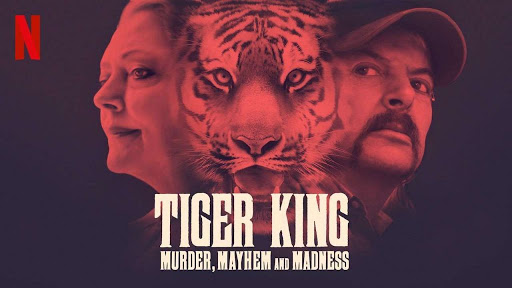
With all the psychosis 2020 has seemed to put us through, has it surprised anyone that a documentary about polygamous, gun-toting, gay meth-heads who raise tigers and hire hitmen has become wildly popular? 

Of course not: watching Tiger King: Murder, Mayhem, and Madness is like watching the Kardashians but in Oklahoma with ex-cons. Which is to say, it’s to be watched obsessively and in unhealthy volumes. 

The docuseries revolves around Joe Exotic, the almost cartoonish owner of the Greater Wynnewood Exotic Animal Park (G.W. Zoo), and his steady downfall. Exotic, who’s real name is Joseph Allen Maldonado-Passage, is currently serving a 22-year prison sentence for assorted crimes, including multiple counts of murder-for-hire, falsifying records, and violating the Endangered Species Act

Equally involved in the story of Exotic are his arch-rival and owner of Big Cat Rescue, Carol Baskin, and his mentor Bhagavan “Doc” Antle, who runs Myrtle Beach Safari. Baskin, Mantle, and Exotic are all deep into the world of big cats, as well as shameless self-promotion on social media. Despite their antics, however, their popularity may have been dumb luck. 

Youtube channel Screen Junkies put it best when it describes Tiger King as “the ultimate example of timing is everything”. Truly, the docuseries was one of the earliest productions to actually benefit from a national quarantine. 

However, Tiger King’s notoriety points to a larger issue at hand. At the end of the day, these are real people making destructive life choices. And we the viewers are watching lives unravel from our couches. 

In the wake of Tiger King’s release the internet was flooded with memes. Of course, it wasn’t exactly hard to make fun of something as ridiculous as this. But the instantaneousness with which the internet decided to laugh at Tiger King instead of looking at the actual issues it presented is more than a bit concerning. 

Some of the memes reflect strangely macabre tones, like the Tik Tok trends that state with certainty that Carole Baskin killed her husband while smiling people dance along. And some have led to greater action, like the free Joe Exotic memes that have prompted his legal team to actually try and seek a presidential pardon for Exotic

Most concerning of all is that there is little care for the animals being abused in the series. Especially as the G.W. Zoo begins to decline throughout the 7 episode arc, the animals face more and more abuse from frustrated caretakers and a lack of proper food, space, or general care. Exotic’s niece even claimed that Exotic sold frozen cubs to be taxidermied and that he or others were rumored to have performed sexual acts on the animals at the zoo. 

Aside from that, as Sukriti Wahi describes in a piece for ELLE Australia, characters like Joe and Doc are dangerously romanticized by the series. Doc literally runs a sex cult as described by former employee Barbara Fisher. Joe meanwhile continuously supplied one of his former husbands, Travis Maldonado, with marijuana and meth, preying on Maldonado’s addiction to keep him in the relationship even though Maldonado didn’t identify as gay. Another of Joe’s husbands, John Finley (who also didn’t identify as gay), claims that Exotic constantly manipulated him while also keeping Finley around by providing him with guns and trucks. 

At the end of the day, Tiger King may be entertaining, but it’s also a very concerning look into how damaged people can gain insane amounts of popularity on the internet. This notoriety only encourages more of this behavior, and in the end we see more problems and fewer solutions. And that’s a royal pain. 

Categories
Uncategorized

Bewitched By Hate

Netflix’s The Witcher faced severe backlash over casting by some very racist online trolls.

We Have To Cling To Something. If We Don’t, The World Descends Into Chaos.

– Visenna

Some shows are successful because they speak to deeper messages and universal themes. Other shows gain success simply for their fun action scenes or cool story. 

Netflix’s The Witcher has seemingly found a way to straddle that line in the best way possible. 

Based on the book series by Polish author Andrzej Sapkowski, the series takes place in a world filled with magical and supernatural beings, including chemically altered monster hunters known as “witchers”. The original series was adapted into a wildly popular video game series by CD Projekt Red. The video games truly caused the series to gain the wild popularity it has today, with The Witcher 3: Wild Hunt being considered one of the best open-world games to exist

The announcement of the show’s release was met with great excitement, especially as many hoped it could fill a Game of Thrones sized hole in their heart. 

The show was finally released in December of 2019 and quickly rose to be the second most popular series of 2019 on the streaming service, despite being released only 11 days before the end of the year. 

What is most intriguing perhaps is the backlash the series faced in casting. As someone who knew very little about the series before watching the show, I saw trailers and was excited by the thought of more small screen fantasy. Apparently the casting was deemed wrong to many diehard fans though, as many expressed backlash at the choice to cast some characters as not fully white. 

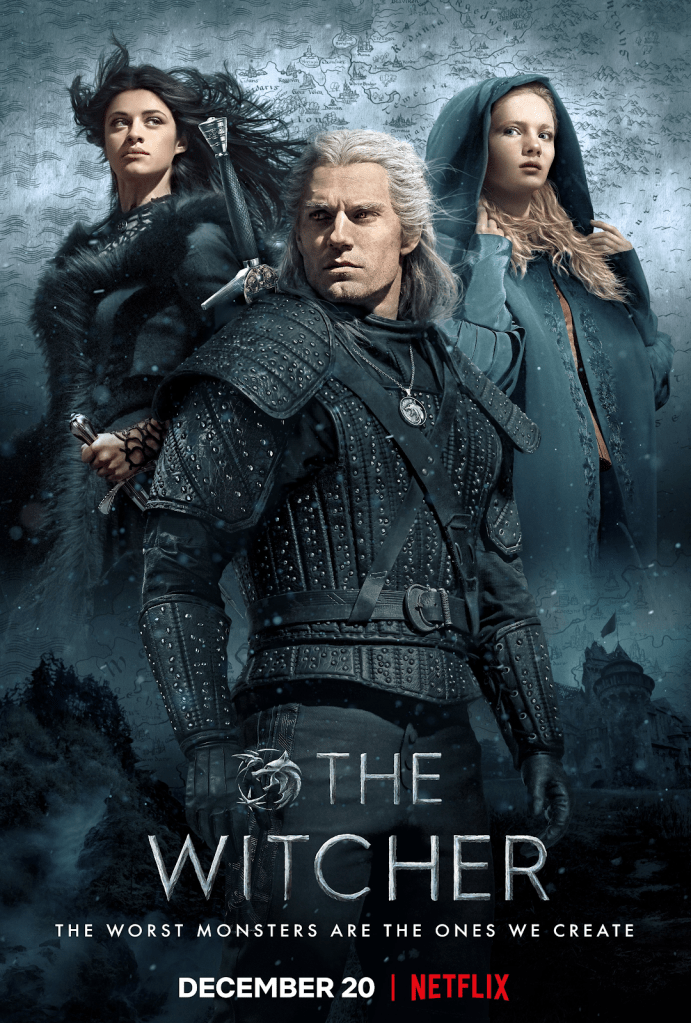
One of the main characters, a sorceress named Yennifer, is described as being pale with dark hair in the books and games but is being played by Anya Chalotra, a biracial actor of Indian and White descent. The backlash caused by this casting choice was quite disturbing, both because  Sapkowski himself admitted that the visual representations of characters such as Yennifer were loosely adapted in the games anyways and were not to be considered canon and because of the overt racism that is being shown.

The backlash was even worse when it was discovered that showrunner Lauren S. Hissrich was looking for a non-white actor to play Ciri (the white-haired and very pale adopted daughter of the main characters). While in all honesty the choice to make Ciri a person of color should play no role in the show, the fan backlash was bad enough to force Hissrich to take a social media hiatus.

These sorts of racists complaints about casting are not new. In 2015 when it was announced that Noma Dumezweni, a black actress, would play Hermione Granger in Harry Potter and the Cursed Child, many fans were outraged even as J.K. Rowling and Emma Watson both praised the decision

In 2019, Halle Bailey faced the same backlash when it was announced that she, a black actress, would be playing Ariel in the upcoming live-action remake of The Little Mermaid

The irony of the complaints about casting in The Witcher is that the show itself comments on racism throughout. Even though the main character, Geralt, is a white man, he is a witcher. In the world in which the story is set, witchers face significant hardships when dealing with humans who look down upon them and judge them. As people expect to watch Geralt push through his own challenges with racism, it’s strange to think that those who are most “in tune with the lore” don’t recognize the double standard they have. 

Frankly, the overt racism that these complaints show is disheartening. Fans are hiding their hate behind claims of “canonical lore”, and then trying to say that they aren’t being racist. It’s time for people to stop looking at beloved characters as being so flat and underdeveloped that they can only be recognizable by race and features. The diversification of casting in television has and continues to be a struggle, and shows that do it well should be praised, not berated. 

If we ever want to be an equal society, we need to be okay with change. And maybe that first change is seeing a beloved character in a new way. 

Categories
Amazon Prime Final Exam Journalism

Who’s Laughing Now?

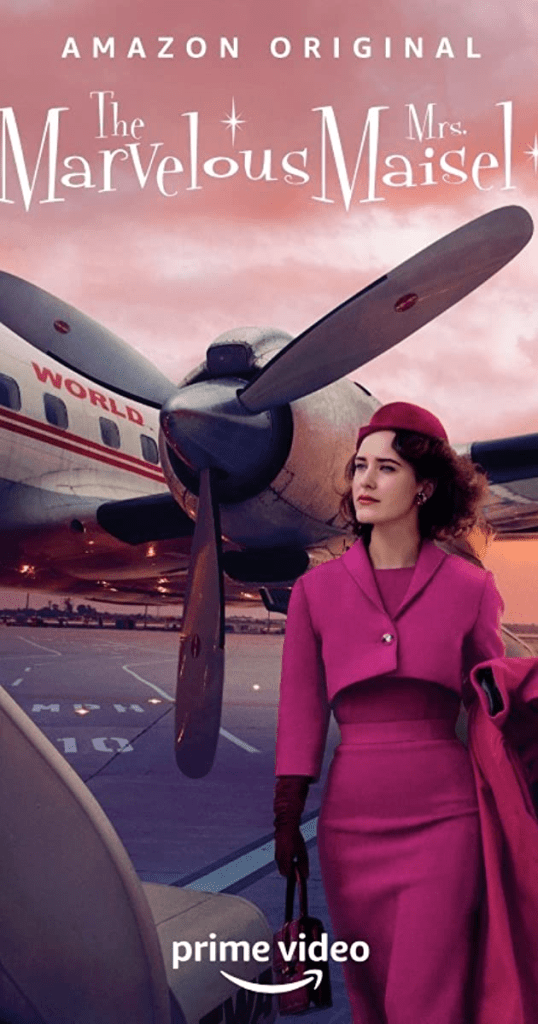
Amazon Prime’s The Marvelous Mrs. Maisel shows the world modern feminism through a comedic lens.

Comedy is fueled by oppression, by the lack of power, by sadness and disappointment, by abandonment and humiliation … Judging by those standards, only women should be funny.

– Miriam ‘Midge’ Maisel

Usually, when you think of the late 50s and New York you picture a bunch of white dudes talking about business. Not even any business in particular. You just picture smoking and drinking and a lot of backward comments and then maybe laughing and handshaking and breadwinning. 

What you don’t think of is a woman successfully fighting her way into one of the most male-dominated industries of all time: comedy. The Marvelous Mrs. Maisel tells just that story: a complacent upper-class Manhattan housewife is left by her husband and stumbles into comedy.  

But what makes this show different from others that show women succeeding in entertainment is that the protagonist, Miriam “Midge” Maisel, isn’t fighting alone. Equally integral to her success is her manager Susie, a streetsmart woman who finds crafty ways to “get her girl to the top”. 

The dynamic that Maisel shows us is unique for shows with female protagonists. A lot of shows try to be progressive by simply adding women to the show. But this creates the “sexy lamp” phenomenon. As described by Kelly Sue DeConnick during a 2013 interview with IGN, “ if you can remove a female character from your plot and replace her with a sexy lamp and your story still works, you’re a hack.” 

The other classic motif is the leading lady who is constantly influenced by all the male characters. Jocelyn Nichole Murphy of the University of Arkansas describes this issue in the world of cinema, saying that “female characters [ofter are] centered in ‘themes of self-sacrifice, defined…in relationship to children or to men.’” Katniss Everdeen from The Hunger Games series is the perfect example. She is strong in her own right but her character is always constantly linked to male love interests like Peeta and Gale. 

Then we have the “independent feminist”: a trope that tries to define their character by making every male character an antagonist the woman has to defeat or overcome. This trope is most “inspiring” and often is the most progressive. Oftentimes the woman is a lone hero who takes revenge on the men who have wronged her, such as in 2017’s Revenge or 2020’s Promising Young Woman

But the goal of modern feminism, like any equality movement, is to allow women and men to not be in competition. While we may root for the independent feminist trope and enjoy seeing women be able to finally take action against their abusers, that can’t be the only way strong women are depicted in the media. The adversarial relationship often demonstrated in the independent feminist trope still makes an “us vs. them” mentality that isn’t sustainable for long term equality. 

Maisel shows us a female protagonist who competes with both men and women. As much as Midge has to prove herself to sexist male club owners, she also competes with fellow female comic Sophie Lennon. At the same time, Midge isn’t ever made to ignore her traditionally female stereotypes. She still loves to shop and wear dresses and continues to cook and take care of her kids. And most importantly, she is still shown to be reliant on others. Midge has to turn to her family for financial support, and she relies on Susie to actually succeed in comedy. 

And that’s the secret sauce that makes the show so successful. Midge is a smart and successful character in her own right, but she isn’t depicted as a superwoman who doesn’t need help. And when she does need help, often she turns to other women to help her. And there are many times where she is made to choose between her career and her comfortable life and she chooses her career. 

Midge Maisel creates a new kind of female protagonist who works as an equal to men and who is allowed to rely on both men and women to support her. She is the epitome of modern feminism because she isn’t shown to be “different from other girls”. Just as she is succeeding, she inspires one friend to advance herself by becoming financially independent as a typist and inspires her mother to turn down her family’s wealth on feminist principles of inclusion. 

As the fight for equal rights quietly continues, it’s important for us to recognize the power of media in shaping the psyche of the masses. The Marvelous Mrs. Maisel found the magical recipe for how to somehow accurately depict feminism in the 1950s while also being a hysterical binge-worthy show. And that, friends, is simply marvelous. 

Categories
Amazon Prime Final Exam Journalism HBO Netflix

The 5 Best Shows to Binge During Your Quarantine

Now a month into our lovely extended break courtesy of COVID-19, many people have hit a wall in terms of their TV binge sessions. Everyone is caught up on those shows they’ve been dying to see for months. Reruns of The Office and Friends are creeping their way back into people’s “Continue Watching” tabs. 

But fear not, weary binge-watchers! After a few weeks of intense research, here are the top five shows to binge during your quarantine. Regardless of the kinds of shows you like, these top hits are sure to keep you glued to your couch. 

#1: Westworld (HBO) 

It’s really hard to find good science fiction shows. Oftentimes the genre fits the stereotype of being nerdy, or worse uses a really interesting premise to cover up cheap gimmicks and plot holes.

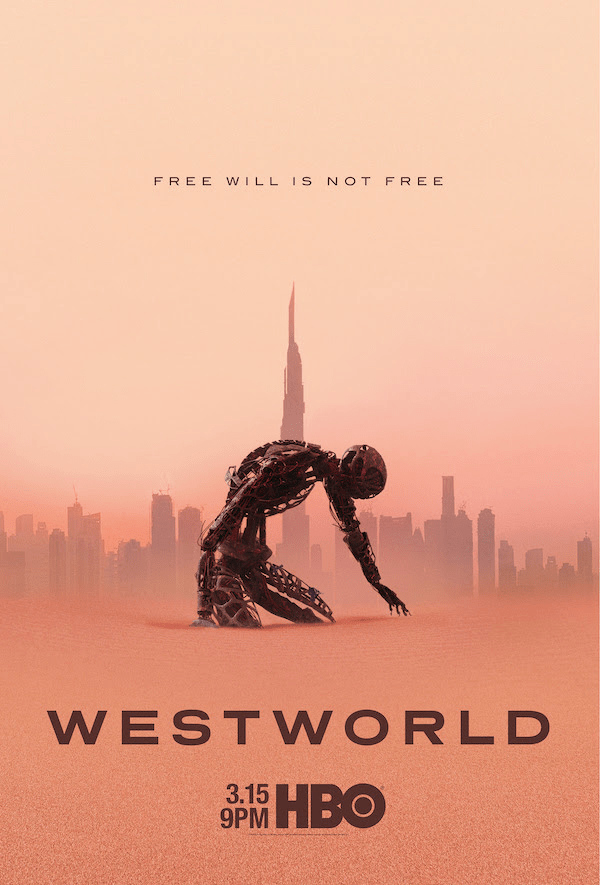
 Westworld manages to avoid falling prey to the same traps its predecessors may have by focusing on its characters and their development. The story is in many ways a coming of age tale about people finding themselves on a hero’s journey. Only this time, there is also advanced AI that is slowly becoming self-aware. 

That perfect balance of action and storyline makes the show great to binge with a friend and discuss the depth and subtleties of the ethical implications of creating consciousness. That, or maybe just enjoying the western style shooter scenes and cool graphics. 

#2: The Witcher (Netflix)

The Witcher is a one-of-a-kind franchise. After starting as a book series, it became a popular video game before Netflix bought the rights to produce the show. The series is wildly successful. It became Netflix’s most popular show of 2019 (second only to Stranger Things) despite being released only a month before the end of the year. 

The show manages to combine the monster-hunting action of the video games with the fantastic world-building of the novels to create a surprisingly unique fantasy hit. The multiple timelines allow for exploration into so many more characters while increasing the mystery of the show. All in all, The Witcher adds up to be a delightful weekend binge for when you just need to be whisked off into a world of monster-slaying and dramatic deaths. 

#3: The Marvellous Mrs. Maisel (Prime) 

Telling the story of a struggling comedian has become pretty mainstream in the past few years. It’s sort of becoming a way for comedians to fictionalize their experiences.

The Marvellous Mrs. Maisel takes a completely different route. It centers on Miriam “Midge” Maisel, a divorced Jewish housewife in the 1960s who upends social norms as she pursues a career in comedy. The show not only leaves viewers buckled over laughing, but it also makes a serious commentary about women in the comedic industry. Midge and her manager Suzie are wildly entertaining as they climb the ladder of success and deal with constant setbacks. A good binge of The Marvellous Mrs. Maisel is the perfect way to lighten the mood in this stressful time. 

#4: Big Mouth (Netflix) 

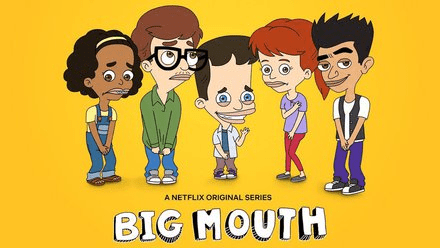
The concept of puberty has been taboo in the television community because of it’s close ties to sex. Netflix started a revolution though when it released a show entirely about growing up and becoming an adult. 

Series creators Nick Kroll and Andrew Goldberg created the animated series loosely based on their own lives to depict what it’s like for teenagers to go through puberty. The result is a raunchy comedy that is as educational as it is funny. Characters deal with issues as light as body odor and as heavy as divorce and pregnancy scare. 

The most entertaining part of the show, however, is the fictional “Hormone Monsters” assigned to each child. The interactions the characters have with their hormone monsters are hysterical (and maybe a touch inappropriate for the family), but make the process of puberty somehow entertaining. Big Mouth makes for a fantastic binge, with awesome voice actors and great writing.

#5: Ozark (Netflix)

It was devastating when Breaking Bad finally ended. The crime drama from the perspective of an average guy-turned-criminal was a hit and took crime shows in a completely new direction. 

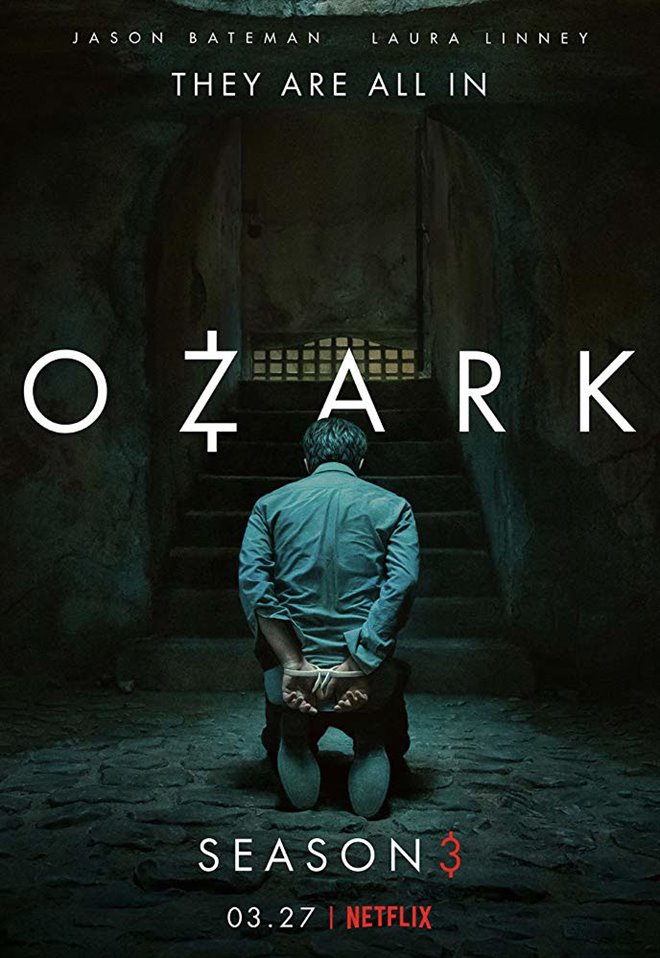
It’s no surprise then that Netflix took that model for its own show with Ozark. The show about a financial planner who is forced to launder money in the Ozark mountains is a high energy hit. Jason Bateman plays the role of Marty fantastically even after years of much lighter shows under the actor’s belt (Arrested Development, Horrible Bosses, etc). 

With season 3 just released a few weeks ago, now is the perfect time to get caught up. The writing will leave you clicking “Still Watching” for hours as Bateman learns how to become a major criminal. 

Categories
Final Exam Journalism HBO

It’s Alive!

HBO’s Westworld confronts the nature of Artificial Intelligence and the ethics of conscious machines.

We humans are alone in this world for a reason. We murdered and butchered anything that challenged our primacy.

Dr. Robert Ford

Westworld is a weird show. And I love it. 

It finds a way to combine a cowboy western adventure with a sci-fi artificial intelligence narrative in the effortless way only the makers of GOT know how to do. One second James Marsden is galloping across a dusty terrain saving damsels, and the next second Anthony Hopkins is discussing consciousness with one of his eerily human-looking robots. 

But that’s what makes Westworld unique from a western/sci-fi point of view. Usually in the classic Cowboys vs Aliens style western the divide between the past and the future is distinct. Two very separate worlds interact in often violent ways. In Westworld however, the technology is integrated into the cowboy world. 

The basic premise of the show follows a Western theme park where wealthy patrons can interact with hyper-realistic AI  hosts. The humans get all the thrill of the gun-slinging, liquor-sipping, sex-partaking West with no danger. Meanwhile, the hosts are killed, raped, and then mind-wiped to do it all over again. As the hosts begin to gain consciousness, serious ethical questions are brought up about the morality of creating AI, and whether consciousness is a luxury reserved only for organic creatures.

The first AI was created in 1951; a behemoth of a machine consisting of 3000 vacuum tubes to simulate a neural network of 40 neurons. For context, jellyfish have approximately 5,600 neuronshttps://en.wikipedia.org/wiki/List_of_animals_by_number_of_neurons. In the 69 years since then, however, we have come much further. In 2016, Sophia the Robot was first activated by Hong Kong robotics company Hanson Robotics. And while its capabilities beyond its programming are nonexistent, to the unknowing observer the robot appears fully alive and conscious. 

According to The Next Web and Futurism, the science of AI, however, is still years behind human-level AI (HLAI). Most advanced AI runs on Deep Learning but has yet to run using Deep Understanding. In other words, the machines can learn how to perform a task, but they can’t understand what they’re doing. This is the biggest limiter to cognition currently, and it will take years and billions of dollars to have a chance of ever getting to that point. 

So now the question we are left to ponder is the big “What if?” If we suddenly do create conscious robots parallel to those of Westworld, what rights do we owe them? If we control them, is that enslavement? Can we morally hinder the development of conscious robots to keep them subdued? 

All of these questions, as ridiculous as they may sound current, are worth considering. Just think back to the ideas regarding privacy in the digital age. If you talked to someone in the 1970s about internet privacy rights and the moral implications, would they not call you crazy? When technology isn’t known of it is dismissed as science fiction. But eventually, we are faced with problems from new technology that require new approaches to ethics and to lawmaking. 

Hugh McLachlan of the Independent writes what seems to be a very simple answer to these complex questions: “To deny conscious persons moral respect and consideration on the grounds that they had artificial rather than natural bodies would seem to be arbitrary and whimsical. It would require a justification, and it is not obvious what that might be.” 

More difficult to answer though could be the questions posed by Nick Bostrom and Eliezer Yudkowsky from Cambridge University. What would it be like for AI that process faster than the human brain? If they were to perceive the world in slow motion, how would that impact our interactions? Would they receive first treatment if injured compared to humans because they would experience more time? 
A lot of these questions are super confusing, but that’s the whole point. Once AI gains consciousness, everything we’ve ever known is redefined. What we can hope, however, is that humanity tries to remain moral. Hopefully, we don’t make the same mistakes as the humans of Westworld, and maybe at the same time, we’ll prevent our very own robot uprising.

Categories
Final Exam Journalism Netflix

Stranger Danger

Netflix’s You sheds light on the dangers of stalkers in the digital age

Love isn’t a strong enough word. Sometimes, it scares me to love someone so completely and not have them love you back.

— Joe Goldberg.

Aren’t dating apps great? 

Like, just imagine how hard it was for people to meet up before they had their phones. You and a bunch of your friends had to dress up, and go out to a bar or a club and then pay way too much for drinks. And that was just to get you a shot at going home with a special someone. 

Nowadays thanks to your handy dandy cellular device it’s as easy to get a date as it is to order Chipotle. A simple swipe, a few flirty texts, and maybe a quick Instagram stalk later you can be in a new relationship if you really want to be. 

But how safe is this anyway? Catfishing on dating apps is increasingly common with UK news site Metro reporting that 28% of women and 43% of men admitted to being catfished in 2018

Recently Netflix shined a light on the dangers of stalkers and the internet in their hit show You. Transplanted from Lifetime after receiving major ratings boost on the streaming platform to the stalker thriller takes a unique look at what it means to be a creep in 2019. 

The main protagonist Joe Goldberg is a love addict obsessed with finding a romantic connection with the women he stalks. And while Joe himself starts the series off shunning the use of social media, he frequents it to find information on his prey. The woman of Joe’s fixation in season one, Guenivere Beck, is shown to leave all her accounts to be public. Expectedly, Joe takes this to mean Beck “want[s] to be seen. Heard. Known. Of course I obliged.” 

Even in the next season, Joe once again stalks his new fixation, Love Quinn, through the same means. Combing through her and her social circle’s Instagram feeds, he builds profiles on all of them which he uses to his advantage when trying to seduce his love interest. 

While the storylines of You are definitely far-reaching in terms of the ability of most stalkers to also be handsome and charming casanovas, the depiction of how social media is used is frighteningly real.  

Now, the occasional Insta-stalk is nothing rare. According to MSN, 76% of people surveyed admitted to having stalked an ex online. But while most of us stalk with harmless intentions, there are plenty of horror stories even worse than the deadly ends Netflix depicts. 

Esquire covered this exact sort of situation — a budding romance turned to cyberstalk —  in their April 2015 issue. It describes the horrifying story of a woman who got into an online relationship with a man that quickly became creepy, and when she tried to end it began receiving daily if not more frequent emails of disgusting harassment. 

A Netflix show like You may tell this kind of story for our entertainment, but when we see things like this happening in the real world it becomes clear just how easily we could all face our very own Joe Goldberg. 

The question then becomes how do we fight an enemy we don’t even know? Oftentimes those who are stalked don’t realize it’s happening until it’s too late, but keeping accounts private and controlling who can follow you can be a major deterrent to petty stalking. 

More importantly, though, the stigma of coming forward must be overcome. Like USCNews writes, “Victims often second-guess themselves or believe they’re overreacting.” Addressing the issue and educating people on internet safety are both essential steps to protecting loved ones online. 

While it may seem like You is just a fantastically gripping show to binge on a lazy weekend, the depth of the premise goes far beyond what most viewers realize. The concept of stalking has been redefined in the age of social media, and You does an amazing job of depicting how our digital lives can be weaponized in the wrong hands.

Categories
Final Exam Journalism

Welcome to Midbrow

We live in a digital age.  

 I promise you that will be the first and last cliche you will read here. 

But in all seriousness, the internet has rapidly transformed our consumption of media. Gone are the days of 4 channels on the TV. No longer do kids have to settle for Disney Channel or Nickelodeon when they get home from school. Primetime shows from the major networks aren’t always the topic of water-cooler conversation the next day at the office.

When early original content like Netflix’s House of Cards or HBO’s Game of Thrones became popular in the early 2010s, there was no telling how the streaming industry would react. To many people this was a fluke; occasionally a hit would be produced by a streaming service but the best shows were always broadcasted first. I still remember seeing the little “Netflix Original” icon on a show and immediately assuming it was cheap, poorly made, or too eclectic to be good. Flash forward to today and I now look to original content first because I know and trust the brands behind it. 

The beauty of content made directly for streaming is found in the little things, like how the length and number of episodes tend to be adapted to fit the storyline as opposed to the other way around (where commercial time and scheduling forces writers to craft a narrative around 50 car ads). Even the fact that characters are allowed to engage in whatever their version of sex, drugs, and rock and roll is is unique to this form of content. The streaming giants aren’t barred by the same restrictive rules as network TV. They’re free to let their characters drop the occasional F-bomb when they’re angry, or act in adult ways when the story calls for it. 

What’s most important about “made for streaming” content as a genre, however, is the fact that it can tackle real issues through storytelling. TV has always been seen as a relatively low brow form of media. Novels had depth and worldliness, the theater had the convention of human emotion, and cinema worked as this magical fusion between the wonderous possibilities of novels and the human impact of the theater. 

What I think has happened today is a revolution in television. I think that streaming content has invented a new degree of “sophistication” in media: midbrow. It’s not classy melodramatic highbrow content, but it’s also not sophomoric lowbrow content either. Instead, these shows combine the great production and writing of highbrow with the human experience of lowbrow to form this new thing. I’ve decided to call it midbrow, which is also what I’m naming this blog.

As I post to this blog every week I’ll take a look at some of the most popular midbrow shows from the most popular streaming platforms. I’ll discuss them, share my recommendations, and then focus on what I feel are some of the most culturally relevant themes. From the portrayal of women in Amazon Prime’s The Marvelous Mrs. Maisel to the witty and yet educational content of Netflix’s Big Mouth and Sex Education, we’ll tackle it all; one midbrow at a time. 

Design a site like this with WordPress.com
Get started