Netflix’s The Witcher faced severe backlash over casting by some very racist online trolls.
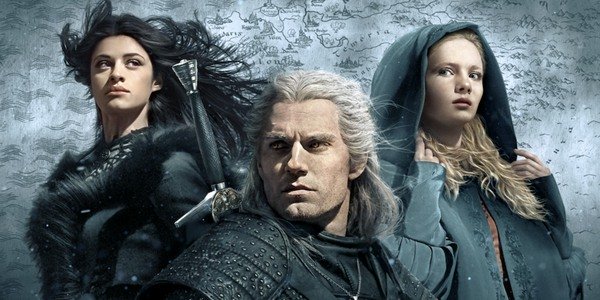
We Have To Cling To Something. If We Don’t, The World Descends Into Chaos.
– Visenna
Some shows are successful because they speak to deeper messages and universal themes. Other shows gain success simply for their fun action scenes or cool story.
Netflix’s The Witcher has seemingly found a way to straddle that line in the best way possible.
Based on the book series by Polish author Andrzej Sapkowski, the series takes place in a world filled with magical and supernatural beings, including chemically altered monster hunters known as “witchers”. The original series was adapted into a wildly popular video game series by CD Projekt Red. The video games truly caused the series to gain the wild popularity it has today, with The Witcher 3: Wild Hunt being considered one of the best open-world games to exist.
The announcement of the show’s release was met with great excitement, especially as many hoped it could fill a Game of Thrones sized hole in their heart.
The show was finally released in December of 2019 and quickly rose to be the second most popular series of 2019 on the streaming service, despite being released only 11 days before the end of the year.
What is most intriguing perhaps is the backlash the series faced in casting. As someone who knew very little about the series before watching the show, I saw trailers and was excited by the thought of more small screen fantasy. Apparently the casting was deemed wrong to many diehard fans though, as many expressed backlash at the choice to cast some characters as not fully white.
One of the main characters, a sorceress named Yennifer, is described as being pale with dark hair in the books and games but is being played by Anya Chalotra, a biracial actor of Indian and White descent. The backlash caused by this casting choice was quite disturbing, both because Sapkowski himself admitted that the visual representations of characters such as Yennifer were loosely adapted in the games anyways and were not to be considered canon and because of the overt racism that is being shown.
The backlash was even worse when it was discovered that showrunner Lauren S. Hissrich was looking for a non-white actor to play Ciri (the white-haired and very pale adopted daughter of the main characters). While in all honesty the choice to make Ciri a person of color should play no role in the show, the fan backlash was bad enough to force Hissrich to take a social media hiatus.
These sorts of racists complaints about casting are not new. In 2015 when it was announced that Noma Dumezweni, a black actress, would play Hermione Granger in Harry Potter and the Cursed Child, many fans were outraged even as J.K. Rowling and Emma Watson both praised the decision.
In 2019, Halle Bailey faced the same backlash when it was announced that she, a black actress, would be playing Ariel in the upcoming live-action remake of The Little Mermaid.
The irony of the complaints about casting in The Witcher is that the show itself comments on racism throughout. Even though the main character, Geralt, is a white man, he is a witcher. In the world in which the story is set, witchers face significant hardships when dealing with humans who look down upon them and judge them. As people expect to watch Geralt push through his own challenges with racism, it’s strange to think that those who are most “in tune with the lore” don’t recognize the double standard they have.
Frankly, the overt racism that these complaints show is disheartening. Fans are hiding their hate behind claims of “canonical lore”, and then trying to say that they aren’t being racist. It’s time for people to stop looking at beloved characters as being so flat and underdeveloped that they can only be recognizable by race and features. The diversification of casting in television has and continues to be a struggle, and shows that do it well should be praised, not berated.
If we ever want to be an equal society, we need to be okay with change. And maybe that first change is seeing a beloved character in a new way.
 Midbrow